
Julkaistu
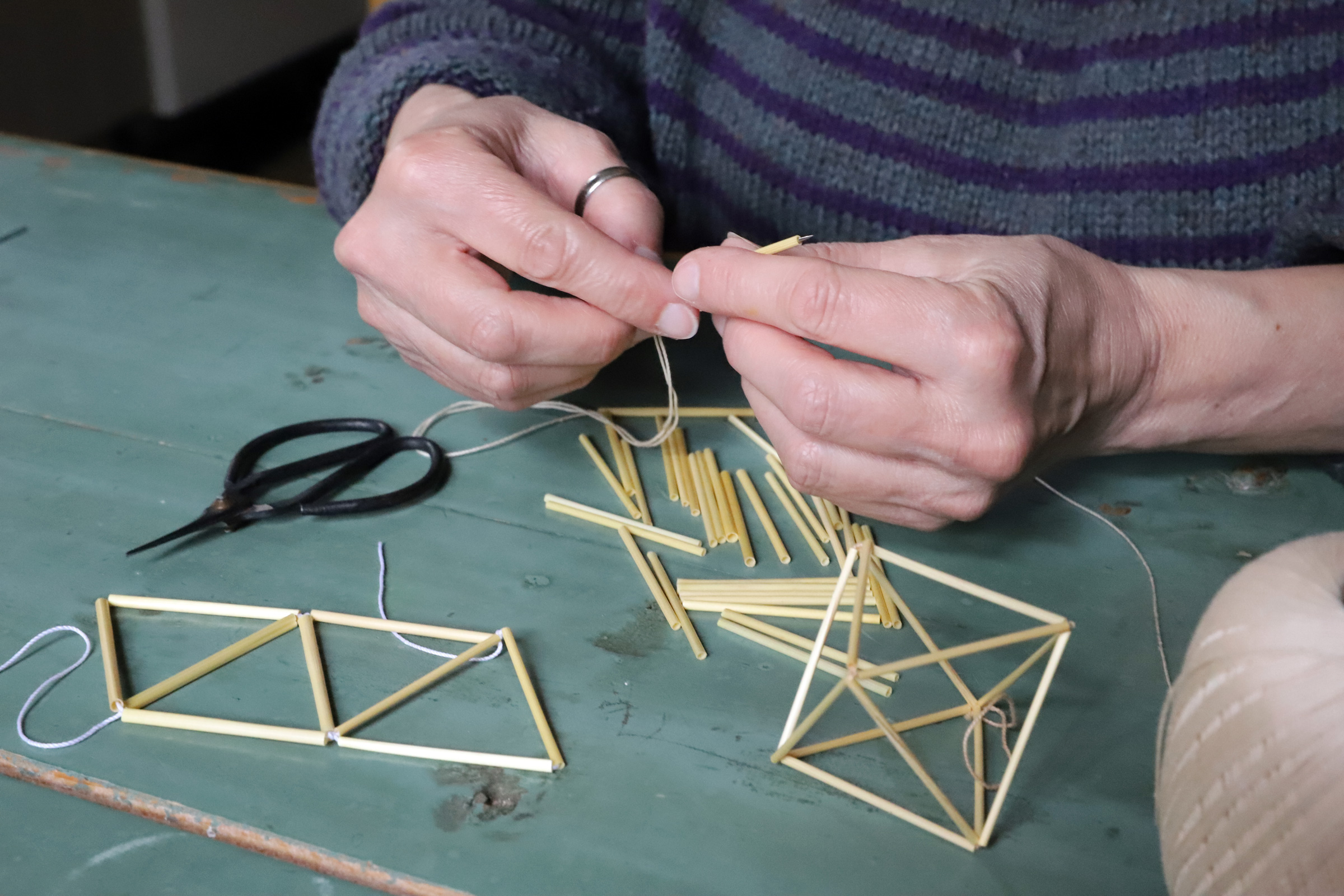
Straw work combines valuable cultural heritage with the beauty of delicate natural materials
The Finnish Crafts Organization Taito has chosen straw work as the handicraft technique of 2027. Straw work is part of Finnish handicraft tradition, its roots go back to the time when natural materials were used extensively for everyday needs and celebration decorations. Especially the himmeli and the straw goat have been part of Finnish Christmas traditions. Today, straw inspires new creators again: old craft techniques are cherished, and from them, modern crafts and interior objects are also created.
The many possibilities of a simple natural material
“Straw work is a good example that making a beautiful and meaningful object does not always require new or highly refined materials,” says Minna Hyytiäinen, Executive Director of the The Finnish Crafts Organization Taito.
Working with natural materials teaches respect for the material’s own properties. Straw is delicate, but when properly handled, it is a durable material, and working with it requires patience, precision, and knowledge of the material. It is precisely these qualities that make straw work fascinating. The straw’s natural golden hue, lightness, and unique texture make it interesting.
Although straw was originally a byproduct of agriculture, nowadays it can be difficult to obtain high-quality, beautiful rye straw for handicraft purposes. This autumn, Taito Itä-Suomi has sown traditional rye for this purpose in Mikkeli’s Kenkävero, and in autumn 2027 the association will offer groups the opportunity to learn about straw collection directly from the field and also provide guidance on straw handling. Many craft shops sell pre-cleaned and cut straw, so making a genuine himmeli or straw decorations is possible for anyone.
Traditional craftsmanship is worth preserving
Straw work is not just decoration; it carries knowledge about life in the past, agriculture, the exploitation of natural resources, and human ingenuity. Traditional techniques and skills have been shaped through experience and expertise passed down from generation to generation.
Such craftsmanship remains alive only if it is practiced and taught further. When we learn to select and handle straw, we simultaneously pass on valuable intangible cultural heritage. Practical work helps to understand tacit knowledge that can only be best accessed through experiential activities.
An old skill inspires a new kind of creativity
Preserving tradition does not mean that old patterns should be repeated unchanged. Traditional techniques can inspire new shapes, uses, and artistic experiments, and new materials can also be combined with them.
The world of straw work is not limited to Christmas decorations. A himmeli can be a striking, year-round decorative element or an artwork placed in a space. Traditionally, straw has been woven into, for example, hats and shoe insoles, and the techniques used in these allow for creating something new from straw in interior design as well. Straw mosaic, on the other hand, is suitable for jewelry or small artworks and makes the best possible use of the beautiful, shiny surface of straw.
Delicate material requires patience
Getting to know straw work offers an opportunity to calm down and focus on what you are doing. Working with sensitive materials develops precision, patience, and knowledge of the material.
By exploring straw work, we learn to appreciate natural materials, cherish old craftsmanship, and discover new possibilities in tradition. When old craftsmanship passes into new hands, the tradition remains alive.
Let the straw inspire you
– a small straw can turn into great joy!
Photo Johanna Aydemir.