Julkaistu
The Ministry of Education and Culture has decided to nominate the ryijy tradition for inclusion in UNESCO’s Representative List of the Intangible Cultural Heritage of Humanity, representing Finland’s next submission.
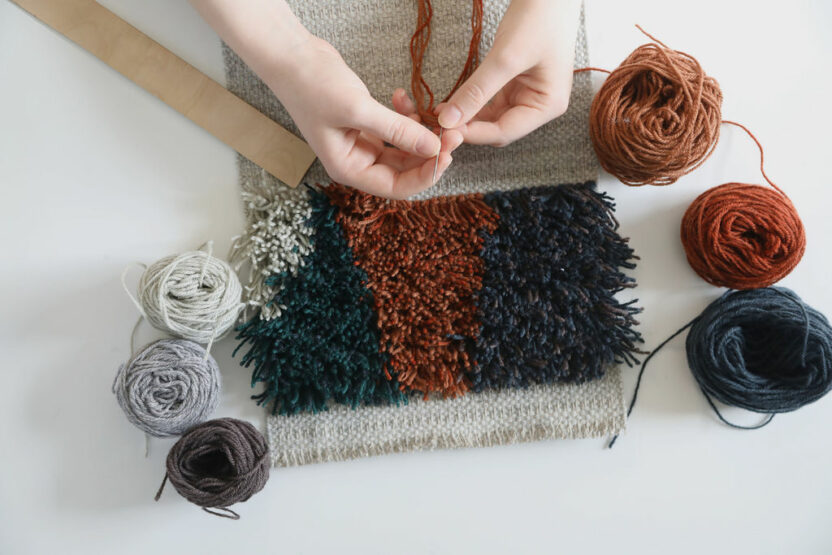
Ryijy (traditional Finnish knotted-pile textile) has a strong connection to Finnish history and identity. For centuries, it has been a part of Finnish life and home interiors, playing a role in weddings, celebrations, significant life events, and family histories. Distinct ryijy designs, color palettes, and symbols have emerged across different regions of Finland, reflecting local cultures.
“The ryijy tradition is a craft and textile heritage that has been passed down from generation to generation for centuries. It has deep roots in Finland and is kept alive by thousands of practitioners throughout the country. The tradition embodies cultural and ecological sustainability, as it is based on long-lasting textiles and renewable natural materials. It is wonderful that we can now nominate the this tradition for inclusion in UNESCO’s Representative List of the Intangible Cultural Heritage of Humanity,” says Minister of Science and Culture Mari-Leena Talvitie.
The ryijy tradition evolves with the times
Ryijys (traditional Finnish knotted rug) has developed into one of the most recognizable forms of expression in Finnish textile art and a significant part of the history of Finnish design. The tradition remains alive and continues to evolve: the technique is applied in diverse ways — in textile art, as a craft hobby, and in home interior design. In this way, traditional expertise takes on new forms and is passed down from one generation to the next.
“The ryijy tradition touches a large number of Finns in one way or another. While ryijys have been a part of homes and people’s lives as functional textiles, they have simultaneously served as significant works of textile art. It is great that, through the proposal being prepared for UNESCO, this living tradition will gain broader international visibility, allowing us to introduce it to new audiences. We are excited to work alongside other practitioners of the tradition to advance the nomination for UNESCO,” says Minna Hyytiäinen, Executive Director of the Finnish Crafts Organization Taito.
In Finland, the ryijy tradition is sustained by numerous enthusiasts, professionals, communities, and organizations. The tradition strengthens cultural continuity and a sense of community. It also encompasses an aspect of ecological sustainability: the valuing of materials, the long-term use of textiles, and the preservation of traditional craft skills all support a sustainable culture of making.
Collaboration around the tradition
The preparation of the nomination for the ryijy tradition is based on extensive collaboration. It involves 38 communities and organizations that uphold the tradition, including craftspeople, associations, museums, and other stakeholders active within this field. The preparatory process aims to highlight the diversity of the tradition and ensure that its current custodians and practitioners are able to participate. The Finnish Crafts Organization Taito is coordinating the preparation of the application in collaboration with the Finnish Heritage Agency and the communities associated with the tradition. Throughout the process, ryijy enthusiasts, professionals, and other parties involved in the tradition will be engaged in the work. The application will be submitted to UNESCO in early 2028.
In total, UNESCO’s lists of intangible cultural heritage already contain nearly 850 entries from 157 countries.
For more information:
The Finnish Crafts Organization Taito
– Executive Director Minna Hyytiäinen, minna.hyytiainen(at)taito.fi, tel. 040 5050944
Finnish Heritage Agency
– Senior Specialist Leena Marsio, leena.marsio(at)museovirasto.fi, tel. 02953 36017
Photo Hilja Mustonen.